PRESENCE - Volume 55
Inspiration For Guitarists
I spent this past week in a recording studio with some of the best musicians I've ever played with.
We're talking top-level pros. The kind of players who show up, read anything, and make it sound like they've been playing the song for years. It was one of those weeks that reminds me of why I fell in love with music in the first place.
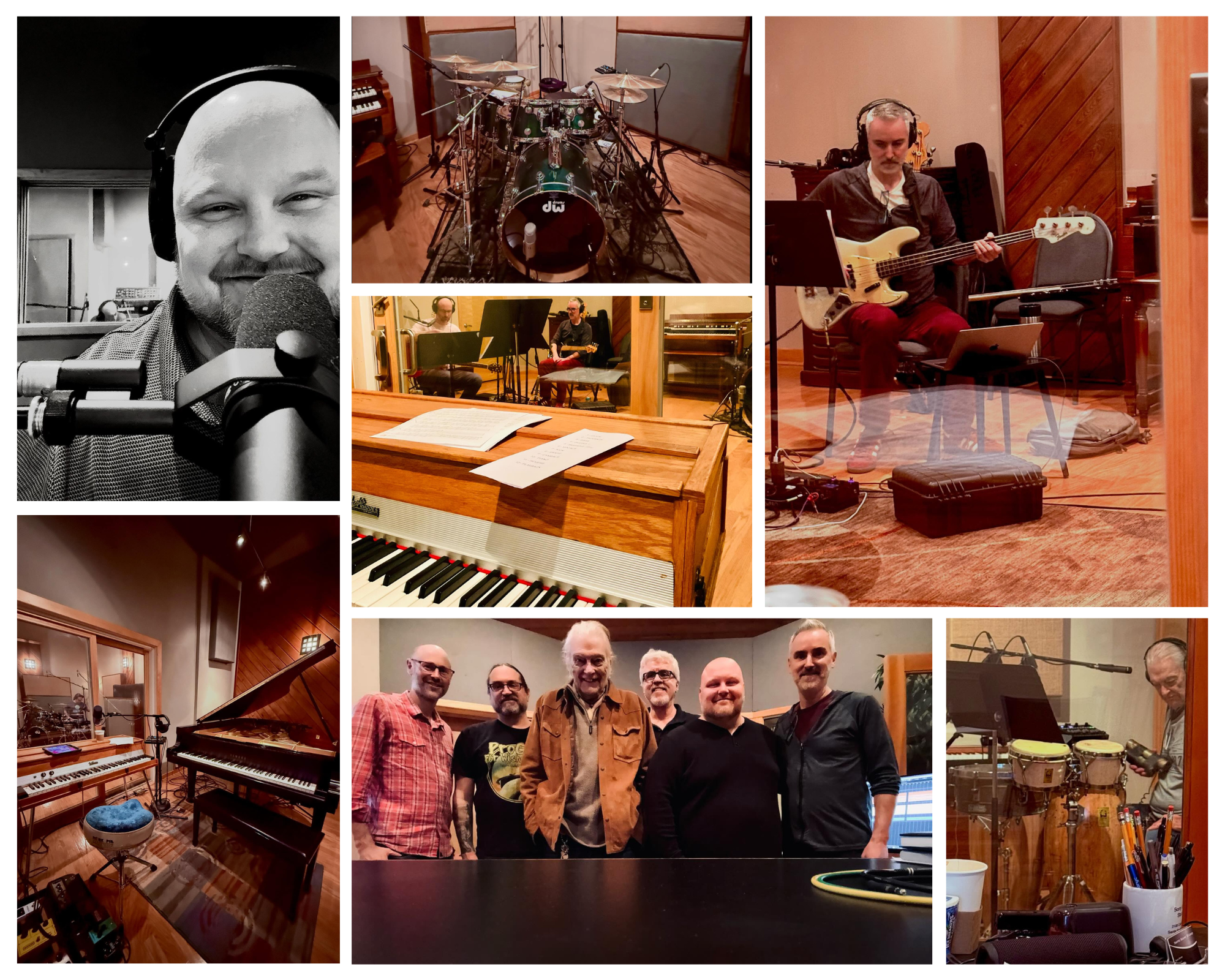
The project belonged to a keyboardist and songwriter named Colby Dobbs. And I want to tell you about him, because he taught me something without even trying to.
I've actually known Colby for a while. During Covid, when we were all stuck at home looking for ways to keep making music, I pulled him into a pretty special project — recording our own versions of some unreleased Steely Dan tunes. If you want to check those out, I'll drop the links below. They were a blast to make, and honestly, working on that project is part of what showed me just how deep Colby's musical instincts run.
So when he called me for this new studio week, I already knew what kind of musical mind I was walking in to work with.
Colby writes these stunning, complex chord progressions. We're talking Steely Dan territory — the kind of harmony that makes you stop mid-take and go, "wait, what was that chord?" Genuinely creative. Genuinely beautiful. The guy has musical ideas that I couldn't come up with on my best day.
But here's the thing.
His charts were a mess.
Not sloppy — just wrong. He knows what he's hearing in his head, he just doesn't always know what to call it. Abmin9 instead of G#min9. G/C instead of C Major 9. And rather than writing the chart out in bars like a normal lead sheet, he'd write the number of beats each chord lasted — so you're doing math while you're trying to learn the tune. For us as studio musicians, it meant a little extra detective work — figuring out what he actually meant, translating his shorthand into something we could all read.
Was it inconvenient? Slightly. Did any of us care? Not for a second.
Because the music was incredible. The labels on the paper had nothing to do with the genius happening in the room.
And that's what I keep thinking about this week.
Here's a guy at the absolute top of his craft — a legitimate artist with a gift that most musicians would envy — and he has a gap in his knowledge. A pretty fundamental one, technically speaking. He doesn't know what to call the chords he writes.
It doesn't diminish him. Not even a little.
I think about how many of you are holding yourselves back because of something like this. Because there's a concept you don't understand, a technique you haven't mastered, a piece of theory you never learned. And somewhere out there — probably in a YouTube comment section — someone made you feel small about it.
I want you to hear this clearly: pay them no attention.
The internet is full of people who confuse knowing terminology with making music. They're not the same thing. Colby proved that to a room full of seasoned professional musicians this week without even realizing it.
Now — don't hear what I'm not saying. You should always be pushing yourself to grow. That drive to get better is part of what makes music meaningful. But there's a difference between healthy growth and the lie that you're somehow inadequate because your toolbox isn't complete.
Nobody's toolbox is complete. Not mine after 30+ years of playing and teaching. Not the pros I was in the room with this week. Not Colby's, who was creating music that stopped all of us in our tracks.
You can't learn it all in a lifetime. Nobody does.
What you can do is bring your real strengths into the room, lean into what makes your playing yours, and trust that the music in your head — whatever you call the chords — is worth something.
Colby taught me that again this week. Maybe it's a good reminder for you too.
Keep playing, Dustin
Links to the Steely Dan recordings I did with Colby-
P.S. I've been promising an Office Hours launch in March, and I owe you a quick update. Between a couple weeks of snow days, my wife having jaw surgery, my daughter on crutches with a sprained ankle, and a few other curveballs, I didn't get the tech side finished in time. Life happened — you know how it goes.
Office Hours will launch in April.
In the meantime, I'm going to do a bonus live call in March for current course members to give you a taste of what Office Hours will feel like — live Q&A, real-time feedback, the whole vibe. Think of it as a preview. When Office Hours officially launches, it'll also include a community space where members can connect, share, and ask questions between calls.
More details on that coming soon. Stay tuned.