PRESENCE - Volume 58
Inspiration For Guitarists
When Jim Brock walks into a room, something shifts.
I've known Jim for decades. I've recorded countless sessions at his studio, played a weekly gig with him for years at the Double Door Inn — one of Charlotte's legendary blues clubs — and I can tell you without hesitation that he's one of the finest musicians I've ever shared a stage with. Seven hundred recordings. Joe Walsh. Joe Cocker. Victor Wooten. John Mellencamp. A Grammy nomination. An Emmy nomination. A performance at the White House. Cultural Ambassador to India. The list goes on longer than most people's careers.
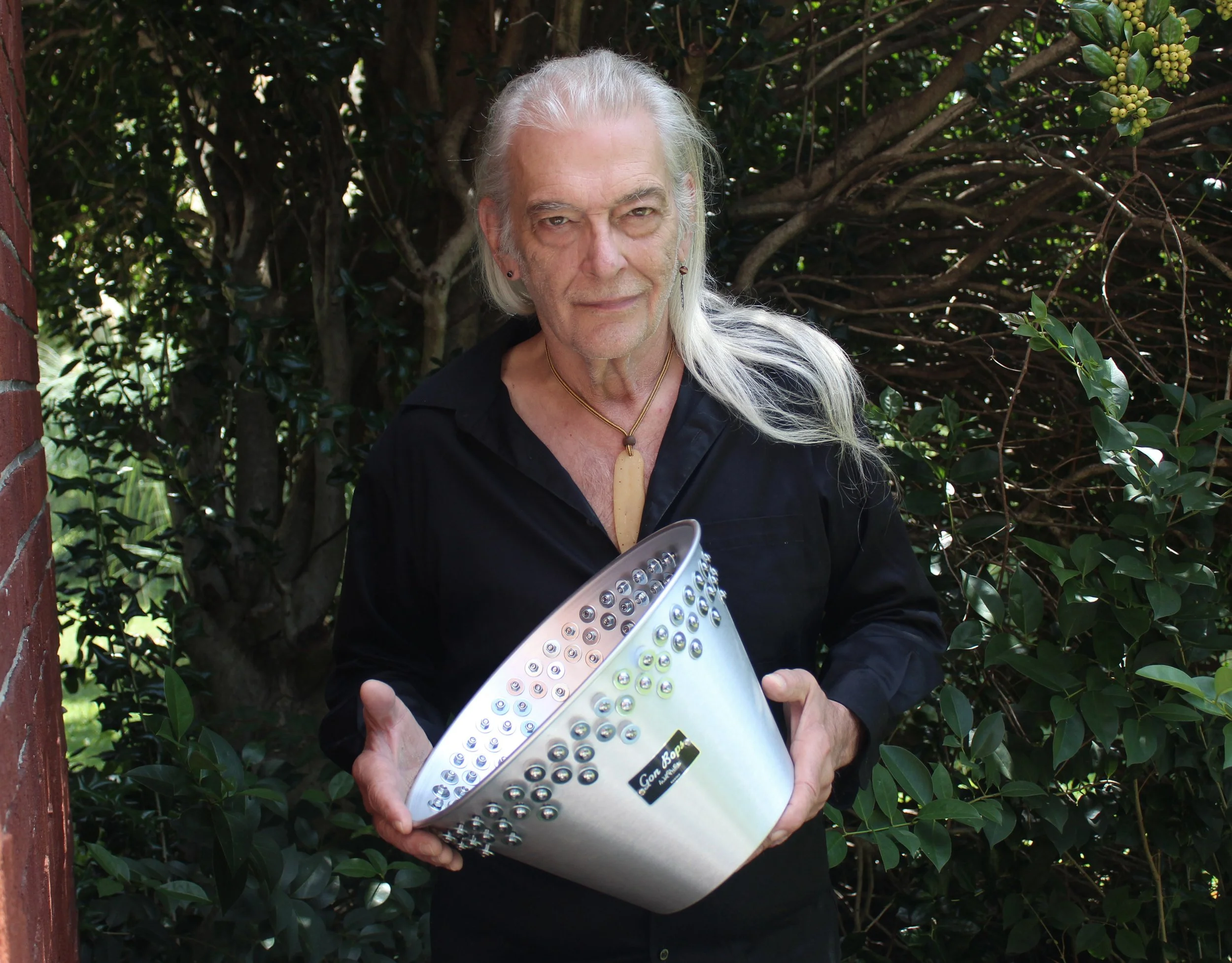
So when I walked into the studio last week and saw Jim setting up his kit in the isolation booth, I just smiled.
There's something about watching a great percussionist set up. He was arranging his congas, adjusting his timbale, positioning his shakers and tambourines just so — all this firepower lined up and ready. I've seen it before but it never gets old. You look at that setup and you just know it's going to be a good day.
But here's what I've learned about Jim over the years.
All that gear, all that experience, all those credentials — and the thing that makes him truly special isn't any of it. It's that he listens. Not politely, not patiently. Deeply.
Like listening is the whole job.
There's something I've noticed about Jim that I've never quite been able to shake. When you ask him a question, he pauses before he answers. Not an awkward pause — a deliberate one. He's not in a rush to fill the space. He takes his time, turns the question over, and comes back with something thoughtful. Something real.
Most people can't do that. Most people — musicians included — are so eager to respond, to demonstrate what they know, to fill every available silence, that they never actually hear what's being said.
Jim hears everything.
And it shows up in his playing in a way that's hard to describe but impossible to miss. He's not trying to show you what he can do. He's listening to what the music needs. There's a quote of his that I keep coming back to:
"Trying to be the best has never been in my thoughts. I play music because that's the gift I was given. My favorite drummers are the ones that are basically invisible until they're asked to step up, until it's their turn."
Think about what it takes to arrive at that place. Seven hundred recordings. Fifty years. And what all of that experience taught him was not to play more — it was to hear more.
At some point during the session, we hit a musical problem that a few of us were overcomplicating. We were talking through it, throwing out ideas, making it bigger than it needed to be. Jim waited. Then he offered something simple. Elegant. It solved the whole thing in about ten seconds and we all looked at each other like — of course.
That's who he is. He waits for his turn, and then he says exactly the right thing.
I think about how much of what holds guitarists back is the opposite of this. The rush to fill every measure. The fear of space. The pressure to prove something — to an audience, to other musicians, to some imaginary judge in a YouTube comment section. We play at people instead of playing with them.
Listening isn't passive. It's actually one of the hardest skills in music — and in life. It requires you to get your ego out of the way, to resist the urge to fill the silence, and to trust that what you add will mean more if you wait for the right moment.
Jim has spent fifty years practicing that. It's why he makes every room he walks into better.
Next time you pick up your guitar, try something.
Play less than you think you should.
Leave more space than feels comfortable.
Listen to what the music is actually asking for — not what you want to show it.
You might be surprised what you hear.
Keep playing, Dustin
PS — Want to hear what I mean? Here's a track from an old album of mine that Jim produced and played on. I recorded the guitars and bass to a click track first and just turned him loose. What he added was perfect — and it always will be.